
See How the World Does It

As early as 2014, the UK recognized the importance of programming talent for the country's future development. Therefore, led by the government, the UK became the first among the G8 industrialized nations to bring programming education into schools, making programming languages the most important 'second foreign language' for children.

In neighboring Japan, the government has deeply embedded programming knowledge into basic education to allow truly interested children to receive professional training early. In April 2020, programming was incorporated into elementary school requirements, moving toward becoming a major supplier of IT talent.


The 108 Curriculum era has officially begun. The nation now considers 'Information Literacy' and 'Computational Thinking' as important indicators for whether children's educational planning is complete. Learning programming helps cultivate children's information literacy and uses computational thinking to enhance abstract thinking and algorithmic concepts, greatly improving problem-solving abilities. Therefore, early exposure to programming is urgent!
 Able to Challenge International Programming Certification
1. Basic programming concepts (sequences, loops, conditionals, variables, etc.) combined with practical applications in mathematics, science, game design, and other subjects
2. Cultivate computational thinking in courses, helping children solve problems more systematically and structurally
3. Develop children's ability to abstract processes and data, learning new programming knowledge in every lesson
1. Each stage can deeply familiarize with today's most popular programming languages, becoming the industry's top choice for talent
2. Interactively apply learned programming languages, enabling children's programming abilities to complete more complex programming projects
3. After learning Python, children can challenge international certifications in that language, usable for academic advancement and study abroad applications
1. Advanced JavaScript applications. After completing the sixth stage, children can independently develop large-scale web projects
2. Learn university-required knowledge and algorithms. OrangeApple will use visual and gamified approaches to make complex programming problems less daunting
3. In the final stage at OrangeApple, AI artificial intelligence operating principles and development logic will be introduced, advancing to higher programming levels

Programming helps children develop logical thinking and creativity, enabling them to solve problems and create new things.

Programming allows children to express their creativity and imagination through code, helping them develop a sense of innovation and problem-solving.

Programming helps children develop a systematic and logical approach to problem-solving, improving their academic performance and future learning.
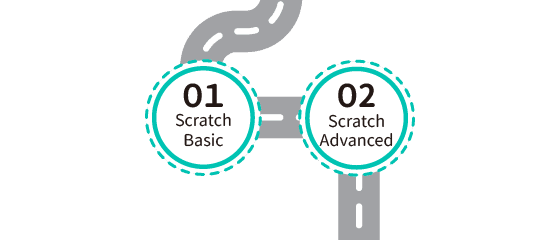
1. Basic programming concepts (sequences, loops, conditionals, variables, etc.) combined with practical applications in mathematics, science, game design, and other subjects
2. Cultivate computational thinking in courses, helping children solve problems more systematically and structurally
3. Develop children's ability to abstract processes and data, learning new programming knowledge in every lesson

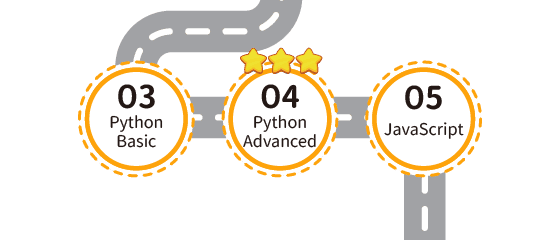
1. Each stage can deeply familiarize with today's most popular programming languages, becoming the industry's top choice for talent
2. Interactively apply learned programming languages, enabling children's programming abilities to complete more complex programming projects
3. After learning Python, children can challenge international certifications in that language, usable for academic advancement and study abroad applications
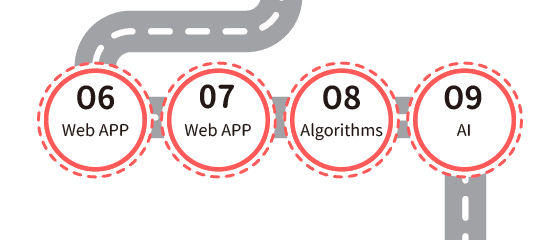
1. Advanced JavaScript applications. After completing the sixth stage, children can independently develop large-scale web projects
2. Learn university-required knowledge and algorithms. OrangeApple will use visual and gamified approaches to make complex programming problems less daunting
3. In the final stage at OrangeApple, AI artificial intelligence operating principles and development logic will be introduced, advancing to higher programming levels
Capable of Challenging International Programming CertificationsGive your child the best learning experience

Join anytime you want to learn

Feel at ease when absent, never fall behind

No worries if you learn slowly

Carefully attend to every child
All instructors at OrangeApple have gone through rigorous screening and training. We not only have solid professional backgrounds and a passion for sharing, but also teaching and guidance skills.
What are the common teaching techniques at OrangeApple?
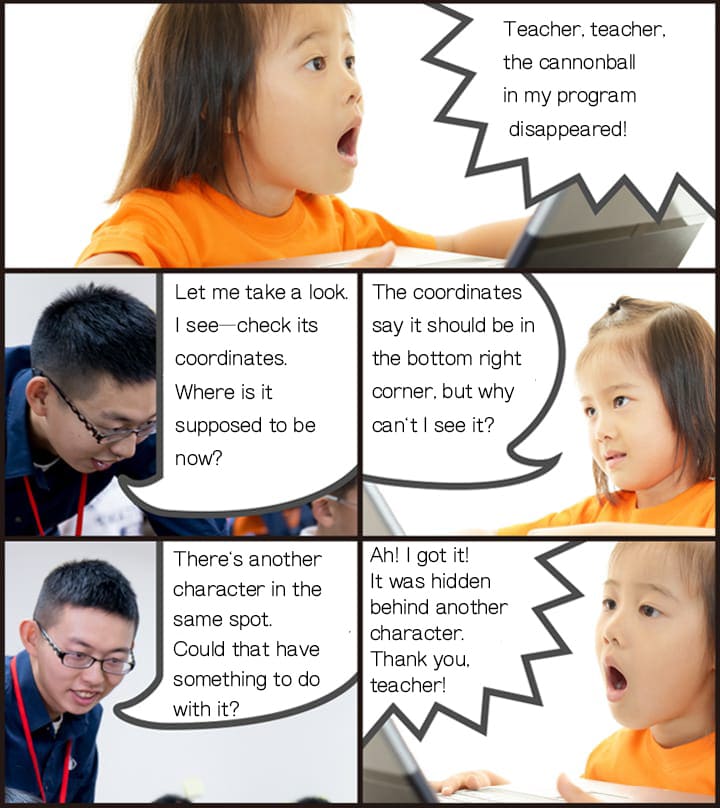
Rather than giving direct answers, we prefer to ask students questions and guide them to find the answers themselves.
In this process of careful analysis, students not only develop debugging skills but also deepen their understanding.